Readers interpret and decipher a message.
Writers construct a message for an audience.
Letters and words (and picture!) are used to represent these messages.
Children who practise writing will be stronger in reading, and vice versa.
Children who read more often generally have stronger writing vocabulary and greater syntactic control in writing than those who read less.
Reading and writing = needs to be taught separately during Years 1-3, but can be integrated through concepts/topics/inquiry in upper years.
Task: Read Voices in the Park by Anthony Brown...how would you describe the characters? e.g. Mother = snobbish; affluent; judgemental, rigid....
How does Brown convey this impression?
* Through word choice - e.g. 'I shooed it off'; 'That horrible dog...'; '"Sit," I said to Charles.'
* Pictures e.g. the background of the second page
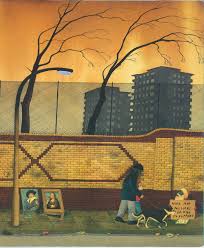
* Differences between illustrations (e.g. Charles/Mother and Smudge/Dad)
* With children, hold shared writing and put the character in a different situation e.g. Mother in a restaurant....brainstorm words first...how would she move? What would she say? Would she shout, call, holler, ask, say, bellow, whisper?
Key points - there are four key skills that readers and writers need
* Concepts of print
* Sources of information they can go to if they want to solve something
* Process strategies for reading and writing
* Comprehension strategies
As teachers, we need to
* Have a good knowledge of what readers and writers do
* Understand reading and writing links
* Draw students' attention to these links
* Get the students to think and talk and work like readers and writers (i.e. modelling, think aloud, prompting, suggesting etc)
My next step:
To use more picture books, and build the children's understanding of connections between reading and writing; vocab and characters.
Tomorrow I will try this by reading My Mum by Anthony Brown, and using it to brainstorm adjectives for our own writing.
Writers construct a message for an audience.
Letters and words (and picture!) are used to represent these messages.
Children who practise writing will be stronger in reading, and vice versa.
Children who read more often generally have stronger writing vocabulary and greater syntactic control in writing than those who read less.
Reading and writing = needs to be taught separately during Years 1-3, but can be integrated through concepts/topics/inquiry in upper years.
Task: Read Voices in the Park by Anthony Brown...how would you describe the characters? e.g. Mother = snobbish; affluent; judgemental, rigid....
How does Brown convey this impression?
* Through word choice - e.g. 'I shooed it off'; 'That horrible dog...'; '"Sit," I said to Charles.'
* Pictures e.g. the background of the second page
* Differences between illustrations (e.g. Charles/Mother and Smudge/Dad)
* With children, hold shared writing and put the character in a different situation e.g. Mother in a restaurant....brainstorm words first...how would she move? What would she say? Would she shout, call, holler, ask, say, bellow, whisper?
Key points - there are four key skills that readers and writers need
* Concepts of print
* Sources of information they can go to if they want to solve something
* Process strategies for reading and writing
* Comprehension strategies
As teachers, we need to
* Have a good knowledge of what readers and writers do
* Understand reading and writing links
* Draw students' attention to these links
* Get the students to think and talk and work like readers and writers (i.e. modelling, think aloud, prompting, suggesting etc)
My next step:
To use more picture books, and build the children's understanding of connections between reading and writing; vocab and characters.
Tomorrow I will try this by reading My Mum by Anthony Brown, and using it to brainstorm adjectives for our own writing.
Comments
Post a Comment